Tag: writing

  • The Family Tradition of Turning the Page

    The Family Tradition of Turning the Page

    Others pass down jewelry, holiday traditions, or stories told around the dinner table.

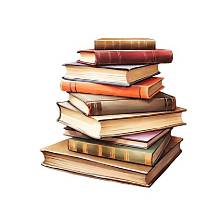
    Looking back, I think my family passed down books.

    Not just the books themselves, although many of them still sit on my shelves today. What was really handed from one generation to the next was the quiet assumption that there was always another world waiting to be explored between two covers.

    There was always the sound of someone turning a page.

    My mother read. My grandmother read. When I visited my dad, we always seemed to find our way to a bookstore—much to my stepmother’s amused, and occasionally exasperated, chagrin. Books weren’t confined to one side of the family. They were simply part of how we lived.

    My mother was an English teacher, but she never treated books like assignments. She treated them like introductions.

    I still smile when I think about her reading The Fellowship of the Ring on the Chicago L. She became so absorbed in the Mines of Moria that she suddenly looked up and realized she’d missed her stop. In our family, getting lost in a book was never considered time wasted.

    Looking back, I don’t think she was simply giving me books.

    She was handing me passports.

    She had an uncanny ability to put exactly the right one into my hands. One introduced me to sisters who loved each other fiercely despite their differences. Another carried me to a windswept prairie. Another convinced me that science, faith, and love could belong in the same story. Still another whispered that ordinary people sometimes stumble into extraordinary adventures.

    Only later did I realize that none of those books was the destination.

    Each one simply pointed toward another shelf.

    Those meticulously researched novels by Georgette Heyer led me into history—not the dates and battles I learned in school, but the lives behind them. Before long, I was devouring biographies of Anne Boleyn and other remarkable women who proved that history could be every bit as compelling as fiction.

    A Wrinkle in Time and The Hobbit opened still more doors. They eventually led me to Ursula K. Le Guin, whose A Wizard of Earthsea became the gateway to Patricia McKillip and the Riddle-Master trilogy, one of my favorite fantasy series. Years later, Le Guin would return to my life in an entirely different way when Steering the Craft found a place on my shelf—not as a novel this time, but as one of the writing books I’ve shared with my own students.

    The best books never seemed content to stand alone. They quietly introduced me to the next author, the next century, the next question, the next world.

    Years passed before I realized I had quietly started handing out passports of my own.

    Somewhere along the way, the books that had shaped me found their way into my children’s hands. Some we read together. Others they discovered on their own. Then came Harry Potter.

    When the final book was released, I happened to be working at our local bookstore. My family came to the midnight release party, and once we got our copy home, we did what seemed perfectly reasonable to us.

    We rolled dice to decide who got to read it first.

    The rest of us spent the following days hovering around the current reader, asking, “Are you done yet?” and trying very hard not to hear any spoilers before it was our turn.

    At the time, it simply felt like a wonderful family memory.

    Looking back, I see something else.

    The tradition had continued.

    No one in my family ever announced that we were readers. No one declared that books mattered or that stories were important. They simply lived as though they did.

    I inherited that habit so completely that I almost didn’t notice I was passing it on.

    Looking back, I don’t think my family passed down a library.

    We passed down a way of seeing the world.

    The books were simply the passports.


    Books Mentioned

    • Little Women — Louisa May Alcott
    • Little House series — Laura Ingalls Wilder
    • A Wrinkle in Time — Madeleine L’Engle
    • The Hobbit — J.R.R. Tolkien
    • The Fellowship of the Ring — J.R.R. Tolkien
    • Georgette Heyer
    • A Wizard of Earthsea — Ursula K. Le Guin
    • The Riddle-Master of Hed trilogy — Patricia A. McKillip
    • Steering the Craft — Ursula K. Le Guin
    • Harry Potter series — J.K. Rowling

    I’d love to hear from you.

    What book became your first passport? Or what book did someone place in your hands that quietly changed the direction of your reading life?
  • The Bells That Became Home

    The Bells That Became Home

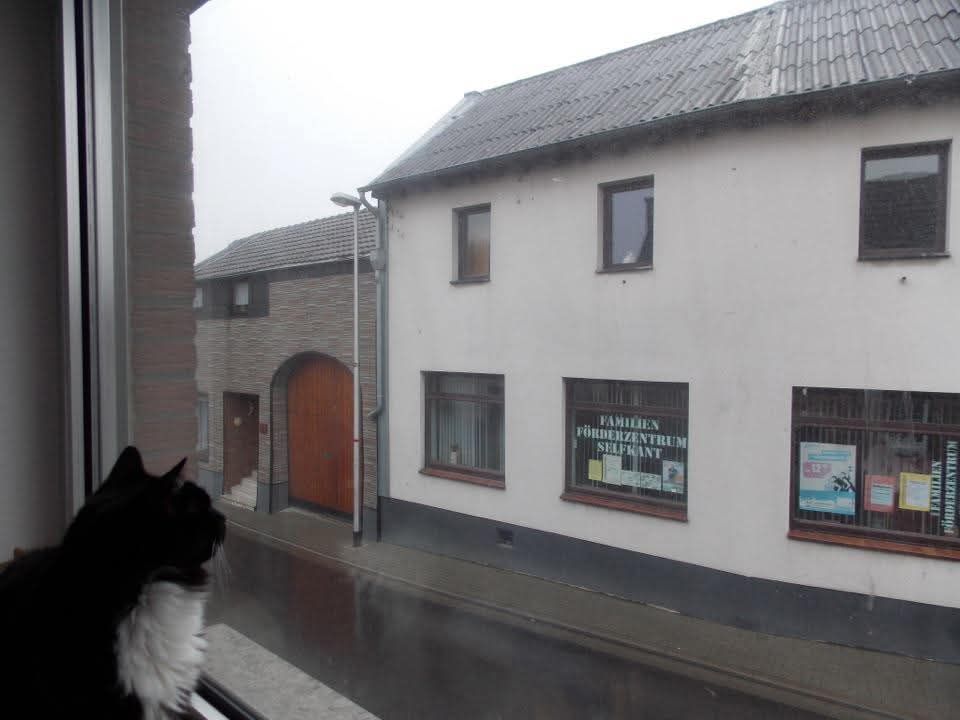
    When we first moved to Germany, we lived almost directly beside the church. The bells weren’t something we heard in the distance; they were woven into the fabric of everyday life. They drifted through breakfast, interrupted conversations, slipped in through open windows, and reminded us that another hour had quietly passed. Before long, they became so ordinary that I hardly noticed them at all.

    At first, though, they felt foreign.

    In the United States, church bells had always belonged to Christmas movies or old downtowns, places you visited rather than places you lived. Here, they were simply part of the neighborhood. They marked the hours, and fifteen minutes before Mass they rang again—a sound that inevitably sent one of us glancing at the clock.

    “Oh heck…we’re going to be late.”

    That sequence became part of our family rhythm. The bells weren’t just calling people to church. They were reminding us to find shoes, grab a jacket, and somehow get out the door on time.

    Looking back, I think the bells taught me the shape of the day before I understood the shape of the place. Morning had its own rhythm, noon another, and Sundays sounded different from the rest of the week. Long before Germany itself felt familiar, those bells already did.

    Without realizing it, I had stopped thinking of them as something uniquely German. They had simply become part of life, woven into coffee, lesson planning, grocery runs, open windows, and the quiet routines that slowly turn an unfamiliar place into a home.

    Then we moved.

    Not far away, but far enough.

    We still hear the bells from our new house. They’re simply farther away now, softened by distance until they drift across the neighborhood instead of filling it. Most days they’re easy to miss if I’m busy.

    And somehow, it was only then that I realized how much they had come to mean.

    It wasn’t while we were living beside the church. It wasn’t when the bells interrupted conversations or reminded us that Mass would be starting in fifteen minutes.

    It was only after they became faint that I understood they had become one of the sounds of home.

    Home doesn’t always announce itself with a single unforgettable moment. More often, it settles quietly into the background of ordinary days until you stop noticing it altogether.

    Only later do you discover that what once sounded foreign had become familiar, and what had become familiar had, without your ever deciding it should, become home.

  • What Catholic School Taught Me About Being a Girl—and a Woman

    What Catholic School Taught Me About Being a Girl—and a Woman

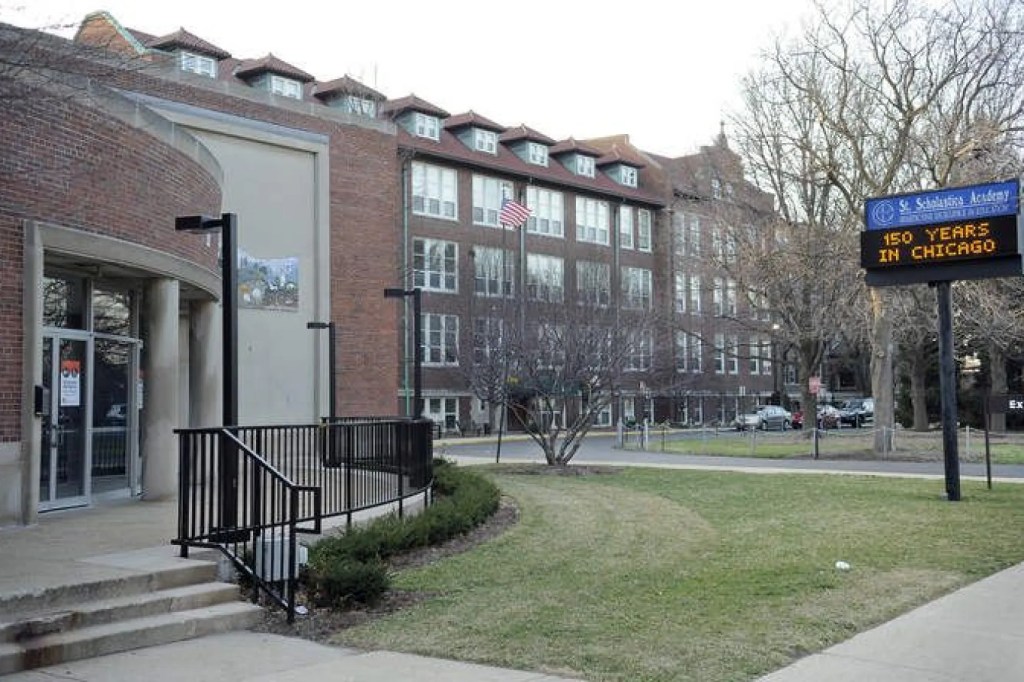
    I spent years in Catholic schools, including an all-girls high school, learning what it meant to be a girl.


    Looking back now, I realize I was also learning—quietly, and often without knowing it—what it might mean to become a woman.


    One of the things that stands out most is something I didn’t question at the time.
    There was no stigma attached to speaking up.
    We were expected to have thoughts. To share them. To engage.
    And in that environment, something subtle but important happened—we learned that our voices mattered.
    A Different Kind of Space
    Without the usual social competition that can come with co-ed spaces, relationships felt… different.
    Stronger, in some ways.
    Not perfect—there were still mean girls, of course. But more often than not, that came down to ordinary pettiness, not the kind of constant comparison that can shape how girls see themselves.
    There was space to simply be—to think, to learn, to grow.

    And it wasn’t just the teachers who shaped that experience.
    Some of the women I went to school with are still part of my life today.
    We’ve stayed in touch over the years, and in different ways, they continue to inspire me, challenge me, and remind me of the kind of women we were being encouraged to become—even back then.
    There’s something meaningful about relationships that grow over time.
    Not perfect. Not constant. But steady.
    And I’m grateful for that.