Blog

  • The Apartment That Raised Me

    The Apartment That Raised Me

    How does a child inherit a way of seeing the world?

    Most of us would probably say our first classroom was an elementary school. We remember tiny desks, sharpened pencils, and the teacher who taught us to read.

    But I’ve come to believe our first classroom begins much earlier than that.

    Long before anyone teaches us the alphabet, someone is quietly teaching us what matters. Children don’t just inherit eye color or family recipes. They inherit habits of attention. They learn what is worth noticing, what is worth caring about, and whether the world is something to be explored or simply endured.

    Looking back, my first classroom was a third-floor apartment in Chicago.

    It wasn’t a remarkable place by most standards. Money was often tight. My mother was a teacher and a working single parent at a time when that wasn’t yet common. She worried about bills more than she let me see, and when life became overwhelming, she could lose her temper in spectacular fashion. Neither of us has ever handled stress particularly gracefully.

    But those aren’t the things I remember first.

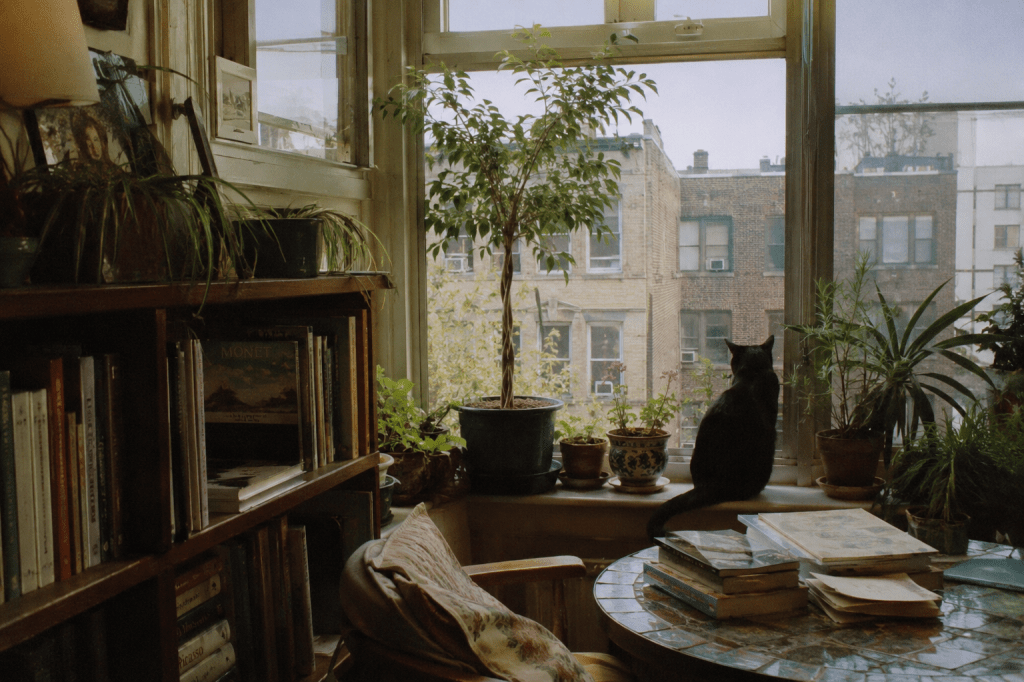
    I remember books and music. I remember a sunroom filled with plants that somehow flourished under my mother’s care, though I’ve never inherited her talent for keeping anything green alive. I remember a cat waiting at the door when I came home from school.

    I lived in that apartment for thirteen years. It wasn’t large, and it certainly wasn’t fancy, but it was home. It was safe. Somehow it held bookshelves and records, musical instruments and houseplants, a kitchen table where homework happened, and enough room for curiosity to take root.

    I was a latchkey kid, so I usually came home before my mother did. The cat greeted me at the door, and more often than not, I’d end up curled up in the sunroom with a book while I waited for her.

    No one told me to do that. It was simply the kind of home we lived in.

    I barely remember the television, but I remember pages turning, records playing, library books coming and going. I remember my mother reading on the train as she commuted to and from school.

    She never announced that books were important. She simply lived as though they were.

    The same was true of museums.

    One of our favorite places was the Art Institute of Chicago, especially the Thorne Rooms. Every visit became a game. The museum would occasionally change one tiny detail—a painting, a piece of furniture, some almost invisible object—and we searched every room with eagle eyes until one of us spotted it.

    “There!”

    “I found it!”

    Looking back, I realize we weren’t really searching for what had changed.

    We were learning to notice.

    My mother loved Monet. She loved museums, music festivals, books, new ideas, and the excitement of a student finally understanding something that had once seemed impossible. She volunteered at the Chicago Historical Society, where she demonstrated life in the pioneer era. I can still picture her patiently spinning flax into thread on a spinning wheel, making it look effortless while I wondered how anyone could have such steady hands.

    She also believed that if you cared about the world, you should do something about it. Election seasons meant volunteering, handing out leaflets, registering voters, and encouraging people to participate. For my mother, being interested in the world meant taking part in it.

    Without ever saying the words, she cultivated wonder.

    And she never stopped being curious herself.

    Years later, when my mother visited us in Europe, she wanted to know everything about wherever she happened to be—what something was, why it was there, how it worked, what had happened there before. Ten million questions, give or take.

    If anyone asked why she wanted to know all those details, her answer was simple: “I don’t know. I just want to know what’s going on around me—all the details of where I am.”

    That was my mother. She wanted to know where she was in the world.

    It wasn’t until I was an adult that I realized not every home cultivates that kind of curiosity.

    As I met people whose lives had been shaped by different experiences, I began to understand that curiosity isn’t inevitable. It isn’t simply a personality trait reserved for a fortunate few. Like kindness, generosity, or hospitality, it can be quietly cultivated—or quietly neglected.

    That’s when I began to understand what my mother had given me.

    She hadn’t simply taught me to love books or museums or music. She had taught me to remain interested—to ask another question, to look a little longer, to believe there was always something more to discover.

    Years later, I caught myself reading aloud to my own children, wandering through museums with them, answering one more question, encouraging one more curiosity. I wasn’t consciously copying my mother. I was simply living the way she had taught me to live.

    Only then did I realize I was passing along an inheritance I hadn’t even known I’d received.

    Maybe that’s how a child inherits a way of seeing the world.

    Not through speeches or perfectly planned lessons, but through the ordinary rhythms of a home where books are read, music is played, questions are welcomed, beauty is noticed, and curiosity quietly becomes part of everyday life.

    It makes me wonder about all of us.

    What are we making ordinary?

    Because children don’t just inherit what we teach.

    They inherit what we make room for.

  • The House Where We Could Exhale

    The House Where We Could Exhale

    There are seasons of life when you never quite unpack completely.

    Even if the boxes are empty, part of you stays ready for the next change. You hesitate before putting too many holes in the wall. You postpone projects for “someday.” You tell yourself you’ll wait until the next place before buying the furniture you really want or planting roots that might have to be pulled up again.

    You live there.

    But you don’t quite expect to stay.

    When our family first arrived in Germany as missionaries, that made perfect sense.

    The first house we lived in was the mission house, generously provided through the support of others. Everyone knew it was temporary. It was a gift, and we were grateful for it, but no one expected it to be home forever.

    Our second house was only around the corner. The church owned it, and we lived upstairs while the ground floor, originally intended to become a twenty-four-hour prayer room, instead became home to refugee families. It was there that neighborhood life began to take shape. The children downstairs adored the rabbits in the garden, even if they occasionally fed them things rabbits probably shouldn’t have eaten.

    It was a good place.

    But it still felt like part of a chapter that was being written one page at a time.

    Then we moved again.

    Not across the country.

    Not even across town.

    Just about a mile away.

    This time, though, something was different.

    The difference wasn’t the neighborhood. Much of our life remained exactly where it had been. Church was the same. Work was the same. Friends were the same.

    The difference was quieter than that.

    For the first time since arriving in Germany, we stepped into a house that wasn’t simply where we happened to be living.

    It was where we began imagining a future.

    Of course, life didn’t suddenly become perfect.

    There were still responsibilities, disappointments, ordinary family disagreements, and all the small frustrations that come with everyday life. Refuge doesn’t erase those things.

    Life became ordinary.

    There were grocery trips and dinners around the table. School days. Church. Work. Weekends that arrived without carrying the weight of another transition. Our youngest daughter found her place at the after-school youth center, building friendships that became part of the rhythm of her life. One of my neighbors was also someone I worked with. The different parts of our lives no longer felt separate. They overlapped in the easy way they do when you’ve lived somewhere long enough for your world to knit itself together.

    There wasn’t one grand moment when I announced to myself, We’re home now.

    There was only the quiet accumulation of ordinary days.

    Then, somewhere along the way, I realized something had changed.

    Almost without noticing, we had stopped living as though we might have to leave.

    For the first time in Germany, we were choosing to build our future there.

    Looking back, I think that’s what transformed that house into a refuge.

    It wasn’t the size of the rooms or the neighborhood or even the fact that it belonged to us.

    It was the quiet confidence that tomorrow would begin in the same place as today.

    It was the freedom to make plans without wondering whether another move lay just around the corner.

    I used to think a refuge was a place where nothing difficult ever happened.

    Now I think it’s something quieter than that.

    A refuge is the place that gives you permission to stop living as though everything is temporary.

    The place where, almost before you realize it, you finally exhale.

  • The Family Tradition of Turning the Page

    The Family Tradition of Turning the Page

    Others pass down jewelry, holiday traditions, or stories told around the dinner table.

    Looking back, I think my family passed down books.

    Not just the books themselves, although many of them still sit on my shelves today. What was really handed from one generation to the next was the quiet assumption that there was always another world waiting to be explored between two covers.

    There was always the sound of someone turning a page.

    My mother read. My grandmother read. When I visited my dad, we always seemed to find our way to a bookstore—much to my stepmother’s amused, and occasionally exasperated, chagrin. Books weren’t confined to one side of the family. They were simply part of how we lived.

    My mother was an English teacher, but she never treated books like assignments. She treated them like introductions.

    I still smile when I think about her reading The Fellowship of the Ring on the Chicago L. She became so absorbed in the Mines of Moria that she suddenly looked up and realized she’d missed her stop. In our family, getting lost in a book was never considered time wasted.

    Looking back, I don’t think she was simply giving me books.

    She was handing me passports.

    She had an uncanny ability to put exactly the right one into my hands. One introduced me to sisters who loved each other fiercely despite their differences. Another carried me to a windswept prairie. Another convinced me that science, faith, and love could belong in the same story. Still another whispered that ordinary people sometimes stumble into extraordinary adventures.

    Only later did I realize that none of those books was the destination.

    Each one simply pointed toward another shelf.

    Those meticulously researched novels by Georgette Heyer led me into history—not the dates and battles I learned in school, but the lives behind them. Before long, I was devouring biographies of Anne Boleyn and other remarkable women who proved that history could be every bit as compelling as fiction.

    A Wrinkle in Time and The Hobbit opened still more doors. They eventually led me to Ursula K. Le Guin, whose A Wizard of Earthsea became the gateway to Patricia McKillip and the Riddle-Master trilogy, one of my favorite fantasy series. Years later, Le Guin would return to my life in an entirely different way when Steering the Craft found a place on my shelf—not as a novel this time, but as one of the writing books I’ve shared with my own students.

    The best books never seemed content to stand alone. They quietly introduced me to the next author, the next century, the next question, the next world.

    Years passed before I realized I had quietly started handing out passports of my own.

    Somewhere along the way, the books that had shaped me found their way into my children’s hands. Some we read together. Others they discovered on their own. Then came Harry Potter.

    When the final book was released, I happened to be working at our local bookstore. My family came to the midnight release party, and once we got our copy home, we did what seemed perfectly reasonable to us.

    We rolled dice to decide who got to read it first.

    The rest of us spent the following days hovering around the current reader, asking, “Are you done yet?” and trying very hard not to hear any spoilers before it was our turn.

    At the time, it simply felt like a wonderful family memory.

    Looking back, I see something else.

    The tradition had continued.

    No one in my family ever announced that we were readers. No one declared that books mattered or that stories were important. They simply lived as though they did.

    I inherited that habit so completely that I almost didn’t notice I was passing it on.

    Looking back, I don’t think my family passed down a library.

    We passed down a way of seeing the world.

    The books were simply the passports.


    Books Mentioned

    • Little Women — Louisa May Alcott
    • Little House series — Laura Ingalls Wilder
    • A Wrinkle in Time — Madeleine L’Engle
    • The Hobbit — J.R.R. Tolkien
    • The Fellowship of the Ring — J.R.R. Tolkien
    • Georgette Heyer
    • A Wizard of Earthsea — Ursula K. Le Guin
    • The Riddle-Master of Hed trilogy — Patricia A. McKillip
    • Steering the Craft — Ursula K. Le Guin
    • Harry Potter series — J.K. Rowling

    I’d love to hear from you.

    What book became your first passport? Or what book did someone place in your hands that quietly changed the direction of your reading life?

  • The Bells That Became Home

    The Bells That Became Home

    When we first moved to Germany, we lived almost directly beside the church. The bells weren’t something we heard in the distance; they were woven into the fabric of everyday life. They drifted through breakfast, interrupted conversations, slipped in through open windows, and reminded us that another hour had quietly passed. Before long, they became so ordinary that I hardly noticed them at all.

    At first, though, they felt foreign.

    In the United States, church bells had always belonged to Christmas movies or old downtowns, places you visited rather than places you lived. Here, they were simply part of the neighborhood. They marked the hours, and fifteen minutes before Mass they rang again—a sound that inevitably sent one of us glancing at the clock.

    “Oh heck…we’re going to be late.”

    That sequence became part of our family rhythm. The bells weren’t just calling people to church. They were reminding us to find shoes, grab a jacket, and somehow get out the door on time.

    Looking back, I think the bells taught me the shape of the day before I understood the shape of the place. Morning had its own rhythm, noon another, and Sundays sounded different from the rest of the week. Long before Germany itself felt familiar, those bells already did.

    Without realizing it, I had stopped thinking of them as something uniquely German. They had simply become part of life, woven into coffee, lesson planning, grocery runs, open windows, and the quiet routines that slowly turn an unfamiliar place into a home.

    Then we moved.

    Not far away, but far enough.

    We still hear the bells from our new house. They’re simply farther away now, softened by distance until they drift across the neighborhood instead of filling it. Most days they’re easy to miss if I’m busy.

    And somehow, it was only then that I realized how much they had come to mean.

    It wasn’t while we were living beside the church. It wasn’t when the bells interrupted conversations or reminded us that Mass would be starting in fifteen minutes.

    It was only after they became faint that I understood they had become one of the sounds of home.

    Home doesn’t always announce itself with a single unforgettable moment. More often, it settles quietly into the background of ordinary days until you stop noticing it altogether.

    Only later do you discover that what once sounded foreign had become familiar, and what had become familiar had, without your ever deciding it should, become home.

  • My Path to Wicca: What Called Me and What I Found

    My Path to Wicca: What Called Me and What I Found


    I’ve found my way to Wicca more than once.
    The first time was before I converted to Catholicism. Back then, I was looking for meaning, something that felt real and grounded. I’ve always found that in the natural world. Put me on a beach, in a forest, or at the top of a mountain, and something in me settles. It feels spiritual in a way I can’t quite explain, but I know it when I feel it.
    Wicca made space for that. It treated nature as sacred, not just symbolic. That mattered to me.
    But I didn’t stay. I eventually converted to Catholicism, and for a time, that felt right.
    The second time I found my way back to Wicca was different. It wasn’t a sudden decision. It built slowly, almost quietly.
    I started noticing a gap between what was taught and how people were actually living. It wasn’t one moment. It was a growing awareness that something didn’t line up. I tried to reconcile it. I told myself I could live with it, that no community is perfect. But over time, that gap got harder to ignore.
    The question of women weighed on me too. I tried to make peace with it. I still think I can accept some parts of the structure, like male-only priests. But I struggled with the sense that women were somehow secondary, especially when I could clearly see how much of the Church actually runs on the quiet work of women.
    And I don’t believe that reflects the heart of Jesus’ ministry. I’m pretty sure it wouldn’t have been possible without women.
    At some point, it became a quiet realization: I couldn’t stay in something that felt that out of alignment.
    But I also knew this about myself. I need spirituality in my life. I’ve tried to ignore that before, and it never really works. I feel it most in the ocean, in the stillness of the forest, in the quiet at the top of a mountain, in those places where everything slows down and something bigger feels close.
    So I found my way back to Wicca.
    This time, it felt both familiar and deeper. I found strong women. I found a sense of the Divine that included both masculine and feminine. I found a spirituality rooted in the natural world, not separated from it.
    It felt honest.
    And yet, it wasn’t the whole story for me.
    There were things I missed. The sacraments, especially. The sense of continuity, of being part of something that stretched back through time. There was a depth there I couldn’t fully let go of.
    So eventually, I found my way back again.
    When I came back, it didn’t feel like going backward. It felt like arriving with new eyes.
    I didn’t leave Wicca behind. I brought parts of it with me. A deeper reverence for nature. A clearer sense of the value and presence of women. A more grounded, lived experience of spirituality.
    And in some ways, I’ve started to wonder if those things were always there, just less visible. Maybe they were part of the original roots, something that has been worn down or quieted over time.
    I don’t have everything neatly resolved. I’m not sure I’m supposed to.
    But I do know this. My path hasn’t been a straight line. And maybe it was never meant to be.

  • Returning to Catholicism With New Eyes

    Returning to Catholicism With New Eyes


    I didn’t come back to the Catholic Church all at once.

    There wasn’t a single moment of clarity, no dramatic return, no lightning strike of conviction. It was slower than that. Quieter. More like a gradual shift under the surface until, one day, I realized I was already on my way back.

    For a long time, I had moved in a different direction. Wicca drew me in with its sense of feminine spirituality. There was something deeply meaningful about that—something I hadn’t felt in Catholicism, at least not in a way I could recognize at the time. It felt expansive, intuitive, and in many ways, freeing.

    And yet.

    What I didn’t realize then was that part of me was still looking for structure, for rootedness, for something older than myself. But I couldn’t name that absence while I was in it. I only recognized it later.

    The return didn’t begin with a decision. It began with a feeling.

    The first time I went back to Mass on my own, without obligation or expectation, something in me settled. That’s the only word for it. Settled. There wasn’t a rush of emotion or a clear thought. Just a quiet, steady sense of yes. This is where you need to be.

    What surprised me most was that I hadn’t even known I missed it.

    I hadn’t been walking around consciously longing for the Church, or for the sacraments, or for the rhythm of the liturgical year. But sitting there, hearing the familiar prayers, moving through something that had shaped me long before I questioned it, I felt a kind of recognition that went deeper than thought.

    And then there was a moment I can’t quite explain. The priest lifted the bread and the wine, and it was as if the room shifted. Not visibly, not dramatically—but unmistakably. You could almost feel it move through the congregation: a kind of collective awe, a quiet, steady love directed toward something just beyond reach and yet somehow present.

    I hadn’t known I was missing that either.

    It wasn’t about agreeing with everything. It still isn’t.

    Part of my distance from the Church had been tied up in my identity as a feminist. That tension hasn’t disappeared. I wouldn’t say I resolved it so much as… learned to live inside it. There are still things that don’t sit easily with me. There are still questions I don’t have answers to.

    But something shifted. I stopped needing the Church to be perfect in order to remain within it.

    Around the same time, I began to understand my mother’s faith in a way I never had before.

    When she was alive, her faith was quiet. Steady, but not something she talked about much. It wasn’t something she explained or tried to pass on in words. After she died, I found traces of it—notes in books, things she had written, small glimpses into a spiritual life that had been sustaining her all along.

    There was something humbling about that. And grounding. Her faith hadn’t been loud or performative. It had simply been there, holding her.

    I think, in some way, that mattered more than I realized at the time.

    There are other, more practical threads woven into this story too. My husband works for the Church. His faith is strong in a way mine has never quite been—unwavering, steady, certain. I don’t always understand it. Sometimes I envy it.

    And sometimes it’s more complicated than that—especially when that same commitment asks more of him than I sometimes wish it did.

    Because faith, for me, isn’t just personal anymore. It’s something I carry into my family life, whether it fits neatly or not.

    Even within our own immediate family, belief isn’t shared in a single direction. We come at faith from very different places, with different convictions, different doubts, and different ways of making sense of it all.

    It’s not always comfortable. There are differences that don’t resolve neatly, conversations that require care, and moments where we feel the distance between us. Even something as simple as what to call the winter holidays can get complicated—Yule, Christmas, or just “December,” depending on who you’re talking to.

    And yet, this is the space I live in—learning how to hold both love and disagreement at the same time.

    So my return hasn’t been neat.

    It hasn’t been a full-circle moment where everything suddenly makes sense. It’s been more like stepping back into something familiar with new eyes, noticing both what draws me in and what still unsettles me.

    But I keep coming back.

    Not because I have everything figured out. Not because all the tensions have been resolved. But because, somewhere beneath all of that, there is still that quiet sense of yes.

    And, for now, that is enough.

  • The World Cup That Spoke Both Languages

    The World Cup That Spoke Both Languages

    Some evenings stay with you long after you’ve forgotten the score.
    For me, it’s the 2014 World Cup final.
    The match kicked off just after evening Mass.
    We lived only a short walk from the church, so instead of everyone heading home, they came to our house. Father knew exactly what day it was. He picked up the pace just a little because kickoff was coming, and he was invited too.
    By the time we reached the house, every chair was spoken for.
    Family. Friends from church. A couple of Americans visiting Germany. Father found a seat. Everyone else settled wherever they could—on the couch, on the floor, leaning against a doorway. Even my daughter, still a preteen and the youngest person there, slipped naturally into the circle. She wasn’t treated like one of the kids. She was simply part of the group.
    German snacks filled the table alongside bowls of chips, beer, and soft drinks.
    Our television wasn’t nearly big enough, so we improvised.
    A computer. A projector. A blank brick wall.
    It wasn’t fancy.
    It didn’t matter.
    For ninety minutes, that wall became the center of our little world.
    Long before I lived in Germany, the World Cup had already become part of my life. My dad sort of followed the World Cup – part of being a soccer grandparent. During those summers, he knew he could call me at almost any point and I’d have the standings memorized, the latest results ready, and the next fixtures already circled in my mind.
    Football was one of the languages my family shared.
    By 2014, I had been living in Germany long enough that another football language had quietly become my own. Weekend by weekend, I’d watched Bundesliga matches with my husband, always hoping his beloved Eintracht Frankfurt would be the one on television. Somewhere along the way, Germany had stopped feeling like someone else’s team.
    Then came extra time.
    The cross.
    The touch.
    The volley.
    Mario Götze scored.
    The room exploded.
    My husband had been sitting backward on a chair, his arms folded across the backrest. He roared, threw both fists into the air—and tipped the chair over behind him.
    Nobody cared.
    We were all shouting.
    Laughing.
    Hugging.
    I’m convinced the whole neighborhood was making exactly the same noise.
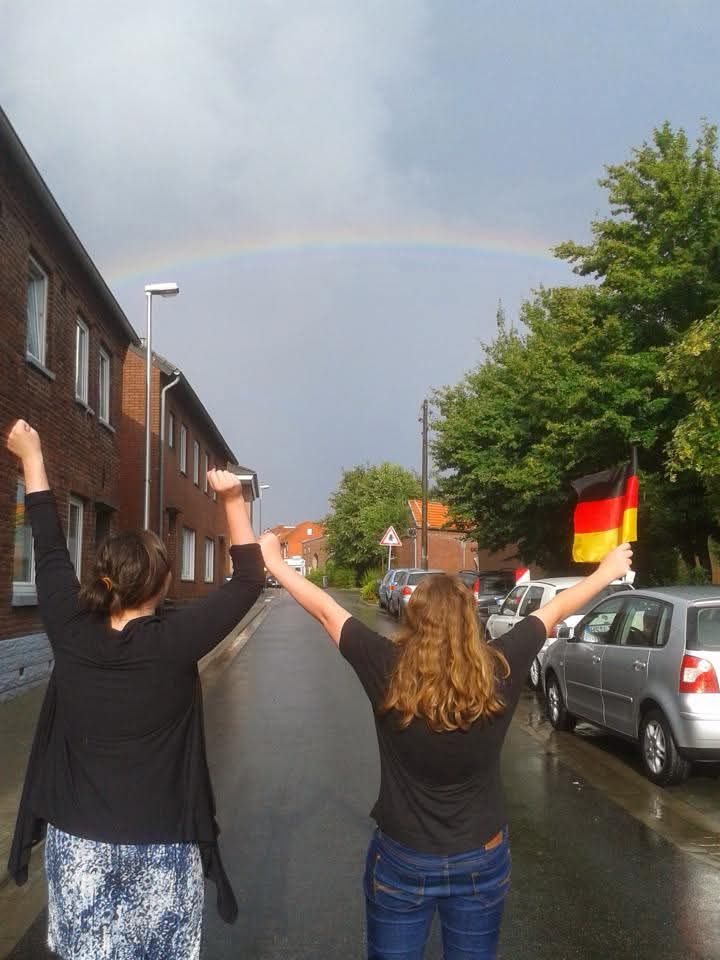
    When we finally wandered outside, we took the German flag from our front window. My daughter and one of the American visitors wrapped themselves in it and walked into the middle of the street.
    Faces painted.
    German shirts.
    Neighbors celebrating.
    For a little while, our quiet village sounded like one enormous living room.
    Looking back now, I don’t remember every pass from that final.
    I don’t remember every save.
    I remember a priest hurrying through Mass because he knew where everyone wanted to be afterward.
    A blank brick wall transformed into a stadium.
    A living room so full that people sat wherever they could.
    My husband cheering so hard he knocked over his chair.
    My daughter standing in the middle of a German street wrapped in a German flag.
    Germany lifted the World Cup that night.
    But when I think about that evening now, it isn’t the trophy I remember.
    It’s the sound.
    One room.
    One village.
    One joyful roar.
    For ninety unforgettable minutes, it didn’t matter where any of us had been born.
    We all spoke exactly the same language.

  • What Catholic School Taught Me About Being a Girl—and a Woman

    What Catholic School Taught Me About Being a Girl—and a Woman

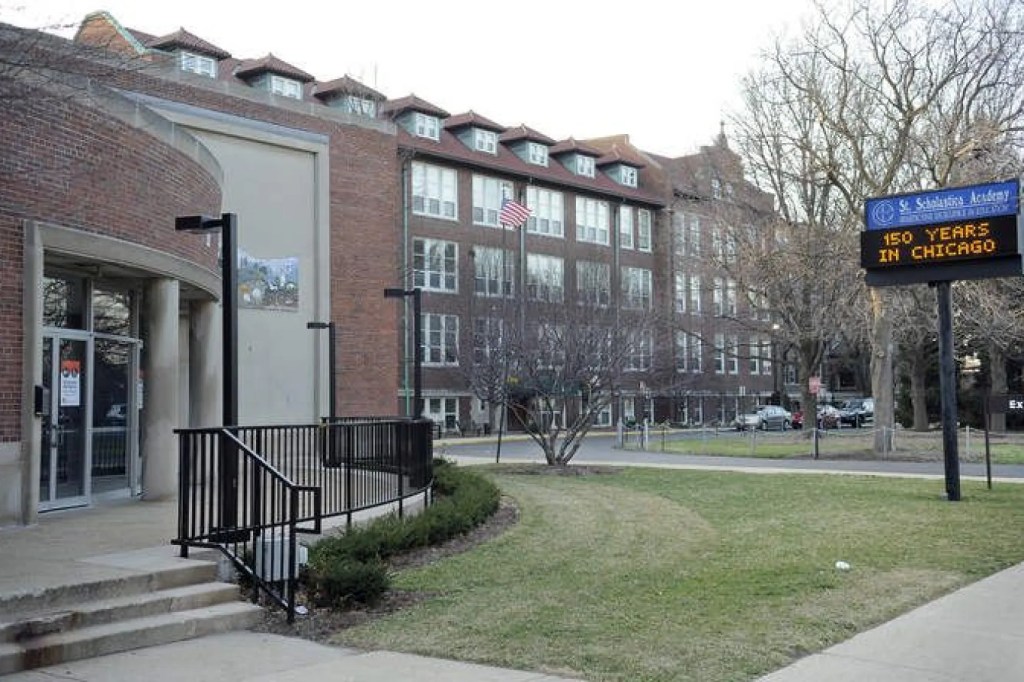
    I spent years in Catholic schools, including an all-girls high school, learning what it meant to be a girl.


    Looking back now, I realize I was also learning—quietly, and often without knowing it—what it might mean to become a woman.


    One of the things that stands out most is something I didn’t question at the time.
    There was no stigma attached to speaking up.
    We were expected to have thoughts. To share them. To engage.
    And in that environment, something subtle but important happened—we learned that our voices mattered.
    A Different Kind of Space
    Without the usual social competition that can come with co-ed spaces, relationships felt… different.
    Stronger, in some ways.
    Not perfect—there were still mean girls, of course. But more often than not, that came down to ordinary pettiness, not the kind of constant comparison that can shape how girls see themselves.
    There was space to simply be—to think, to learn, to grow.

    And it wasn’t just the teachers who shaped that experience.
    Some of the women I went to school with are still part of my life today.
    We’ve stayed in touch over the years, and in different ways, they continue to inspire me, challenge me, and remind me of the kind of women we were being encouraged to become—even back then.
    There’s something meaningful about relationships that grow over time.
    Not perfect. Not constant. But steady.
    And I’m grateful for that.

  • An American in Germany (Married to a Very German Man)

    An American in Germany (Married to a Very German Man)

    The honest, funny, and sometimes exhausting reality of building a life between two cultures.

    I was at our local church for morning prayer when the neighborhood’s older ladies began to arrive for a Bible study with the pastor. They invited me to join, and I followed along as best I could with my limited German.
    And then I realized something.
    They were arguing with Father.
    Not quietly disagreeing—arguing. Over Biblical translation.
    It was a total shock.
    Welcome to small-town Germany.
    After a decade here, much of it has become second nature. But in the beginning (and, if I’m honest, still a little today), it was bewildering.
    Take recycling, for example. It’s not just “separate your trash.” It’s glass, paper, plastics—and absolutely do not mix them. You can get fined for putting paper in household trash. There is a right way, a wrong way, and no gray area in between.
    Then there are quiet hours and Sundays.
    On Sundays, everything closes. Not “shorter hours”—closed. Completely. You learn very quickly to plan ahead, because if you forgot something for dinner… well, you’re getting creative. Aldi is not coming to save you.
    Quiet hours are just as real. We live next to a restaurant, and at 11 p.m., the noise stops. Full stop. (Unless it’s New Year’s Eve—then all bets are off.)
    And then there’s marriage.
    I am married to a man who is still, very much, culturally German.
    He does not jaywalk. Ever. If the light says Do not walk, he will stand there—yes, even at 3 a.m. on an empty street—waiting for it to change.
    He accepts German bureaucracy in a way I simply… do not.
    The sheer volume of paperwork here is impressive and overwhelming to me. Forms for everything. Processes for everything. I tend to rail against it. He just… gets on with it.
    Which, frankly, is a gift. Because otherwise, nothing would get done.
    One thing he truly doesn’t understand, though, is language fatigue.
    If I spend several hours immersed in German—at a class, an event, even a long conversation—it completely drains me. Mentally and physically. I’m done for the rest of the day.
    That constant translating, processing, second-guessing—it takes energy. A lot.
    Some days, it makes the world feel just a little further away.
    To him, it’s a little puzzling. We’ve been here a long time. Shouldn’t I be used to it by now?
    …no. No, I should not. 😄
    And that ties into something harder to talk about: the social side.
    Making friends, joining conversations, feeling at ease—it’s different when you’re not fully confident in the language. There’s always that hesitation. That split-second pause before speaking.
    And, if I’m honest, there’s a bit of perfectionism in there too—the quiet voice that wants to speak German well, not just understandably.
    Which leads to… moments.
    For example, did you know the German words for “naked” and “night” are dangerously similar?
    So yes, it is entirely possible to accidentally introduce yourself as a “naked helper” (Nackthelfer) instead of a “tutor” (Nachhilfelehrer).
    Please don’t ask how I discovered that.
    And yet… somewhere between the rules, the rhythm, the paperwork, the pauses in conversation, and the occasional accidental nudity…
    This has become home.
    Not in a neat, perfectly-adjusted way.
    But in a lived-in, learned, sometimes-laughed-through way.
    And maybe that’s what it really means to build a life between cultures—not that everything becomes easy…
    …but that it becomes yours.

  • The Faith I Chose, Again and Again

    There’s a moment—sometimes quiet, sometimes jarring—when you realize your life hasn’t followed the neat, predictable path you once imagined.
    Instead, it’s wandered. Circled back. Started over more than once.
    That’s been true of my faith.
    I wasn’t a cradle Catholic. My early years were shaped by a loosely practiced Methodist faith—something present, but not deeply examined. It was part of life, but not something I had fully chosen for myself.
    That began to shift when I attended Catholic schools from fourth grade through my senior year of high school. Catholicism became part of the rhythm of my daily life, especially in an all-girls school that shaped how I thought about education, womanhood, and faith.
    But being surrounded by faith is not the same as choosing it.
    During my senior year, my family moved from Chicago to Georgia. With that move came another shift—I began attending a Methodist church again with my mother and grandmother. In college, I briefly joined a Methodist student group. Faith remained present, but it continued to change depending on where I was and what season of life I was in.
    After I became a mother, I found myself reaching again for something grounding. For a short time, I attended a Presbyterian church. And then, like it does for many people, life filled up.
    For about fifteen years, I drifted.
    Faith wasn’t gone. It just wasn’t central.
    Then one Christmas, almost on a whim, we went to a Catholic midnight Mass. My daughter was six at the time. Afterward, she asked a simple question:
    “Can we go back?”
    We did.
    What began as a return for her slowly became something deeper for me. I entered RCIA. I stepped into the Catholic Church not as a student this time, but as someone choosing it.
    And for a while, it felt like I had found my way.
    But the path didn’t stay straight.
    After moving to Germany, I remained Catholic for a couple of years. Then, gradually, I found myself pulled again toward something I had explored before—Wicca. It spoke to a different kind of understanding, one that made space for questions I still carried.
    Eventually, I returned again to the Catholic Church.
    But not unchanged.
    This time, I came back with a deeper awareness of how complex belief can be. I carried the questions, the searching, the detours. Even now, I hold pieces of those experiences alongside my Catholic faith—not as contradictions, but as part of a larger story.
    A story that isn’t finished.
    Along the way, I became a mother. I grew older. I learned—often the hard way—that life is less about having everything figured out and more about learning how to keep walking, even when the road turns.
    That’s what this space is about.
    The Long Way Home is where I reflect on faith, womanhood, and the winding process of becoming who we are. Some posts will wrestle with spiritual questions. Others will sit in the quiet lessons of everyday life.
    I don’t have all the answers. I’m not sure anyone does.
    But I’ve come to believe there’s value in paying attention—in noticing the turns in the road, and what they’ve taught us.
    If your path has ever felt uncertain, nonlinear, or unfinished, you’re in good company here.
    Sometimes the long way home is the way we’re meant to take.