Tag: life

  • The Bells That Became Home

    The Bells That Became Home

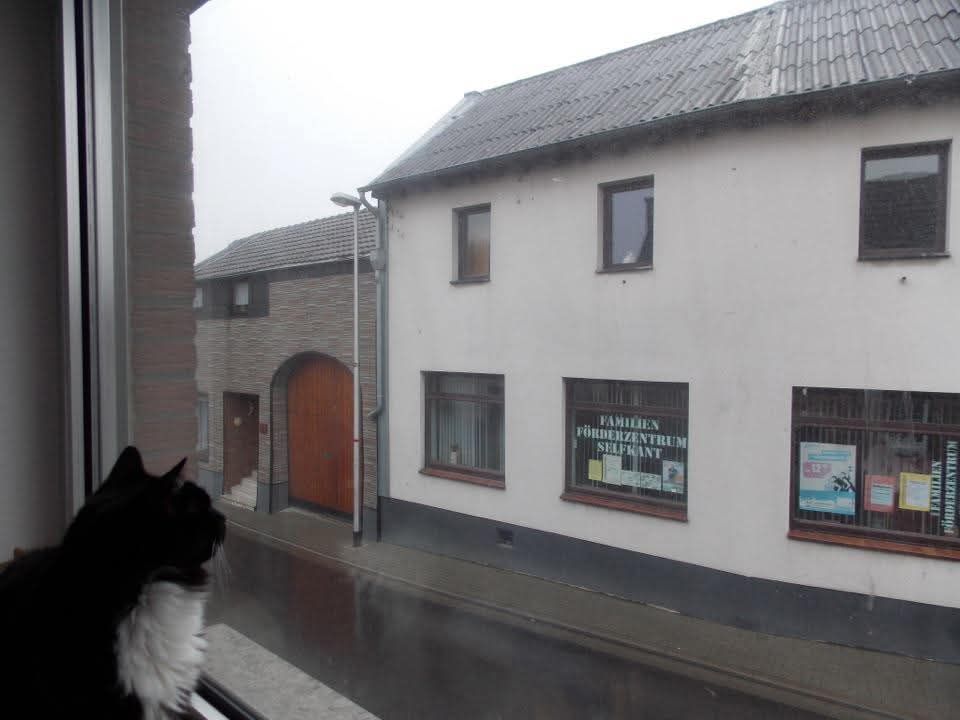
    When we first moved to Germany, we lived almost directly beside the church. The bells weren’t something we heard in the distance; they were woven into the fabric of everyday life. They drifted through breakfast, interrupted conversations, slipped in through open windows, and reminded us that another hour had quietly passed. Before long, they became so ordinary that I hardly noticed them at all.

    At first, though, they felt foreign.

    In the United States, church bells had always belonged to Christmas movies or old downtowns, places you visited rather than places you lived. Here, they were simply part of the neighborhood. They marked the hours, and fifteen minutes before Mass they rang again—a sound that inevitably sent one of us glancing at the clock.

    “Oh heck…we’re going to be late.”

    That sequence became part of our family rhythm. The bells weren’t just calling people to church. They were reminding us to find shoes, grab a jacket, and somehow get out the door on time.

    Looking back, I think the bells taught me the shape of the day before I understood the shape of the place. Morning had its own rhythm, noon another, and Sundays sounded different from the rest of the week. Long before Germany itself felt familiar, those bells already did.

    Without realizing it, I had stopped thinking of them as something uniquely German. They had simply become part of life, woven into coffee, lesson planning, grocery runs, open windows, and the quiet routines that slowly turn an unfamiliar place into a home.

    Then we moved.

    Not far away, but far enough.

    We still hear the bells from our new house. They’re simply farther away now, softened by distance until they drift across the neighborhood instead of filling it. Most days they’re easy to miss if I’m busy.

    And somehow, it was only then that I realized how much they had come to mean.

    It wasn’t while we were living beside the church. It wasn’t when the bells interrupted conversations or reminded us that Mass would be starting in fifteen minutes.

    It was only after they became faint that I understood they had become one of the sounds of home.

    Home doesn’t always announce itself with a single unforgettable moment. More often, it settles quietly into the background of ordinary days until you stop noticing it altogether.

    Only later do you discover that what once sounded foreign had become familiar, and what had become familiar had, without your ever deciding it should, become home.

  • The World Cup That Spoke Both Languages

    The World Cup That Spoke Both Languages

    Some evenings stay with you long after you’ve forgotten the score.
    For me, it’s the 2014 World Cup final.
    The match kicked off just after evening Mass.
    We lived only a short walk from the church, so instead of everyone heading home, they came to our house. Father knew exactly what day it was. He picked up the pace just a little because kickoff was coming, and he was invited too.
    By the time we reached the house, every chair was spoken for.
    Family. Friends from church. A couple of Americans visiting Germany. Father found a seat. Everyone else settled wherever they could—on the couch, on the floor, leaning against a doorway. Even my daughter, still a preteen and the youngest person there, slipped naturally into the circle. She wasn’t treated like one of the kids. She was simply part of the group.
    German snacks filled the table alongside bowls of chips, beer, and soft drinks.
    Our television wasn’t nearly big enough, so we improvised.
    A computer. A projector. A blank brick wall.
    It wasn’t fancy.
    It didn’t matter.
    For ninety minutes, that wall became the center of our little world.
    Long before I lived in Germany, the World Cup had already become part of my life. My dad sort of followed the World Cup – part of being a soccer grandparent. During those summers, he knew he could call me at almost any point and I’d have the standings memorized, the latest results ready, and the next fixtures already circled in my mind.
    Football was one of the languages my family shared.
    By 2014, I had been living in Germany long enough that another football language had quietly become my own. Weekend by weekend, I’d watched Bundesliga matches with my husband, always hoping his beloved Eintracht Frankfurt would be the one on television. Somewhere along the way, Germany had stopped feeling like someone else’s team.
    Then came extra time.
    The cross.
    The touch.
    The volley.
    Mario Götze scored.
    The room exploded.
    My husband had been sitting backward on a chair, his arms folded across the backrest. He roared, threw both fists into the air—and tipped the chair over behind him.
    Nobody cared.
    We were all shouting.
    Laughing.
    Hugging.
    I’m convinced the whole neighborhood was making exactly the same noise.
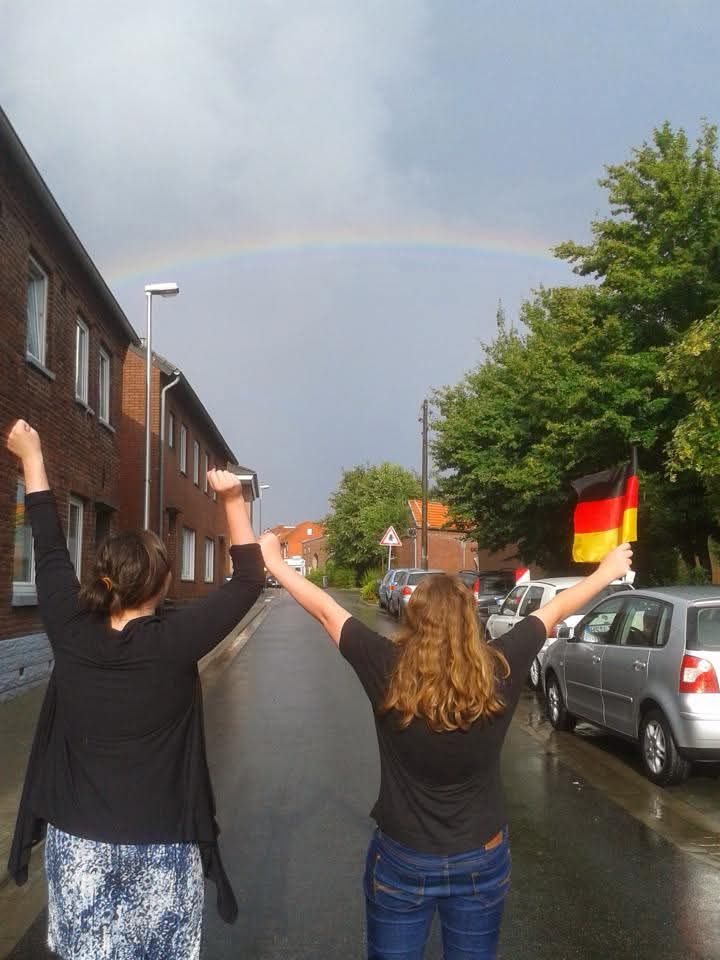
    When we finally wandered outside, we took the German flag from our front window. My daughter and one of the American visitors wrapped themselves in it and walked into the middle of the street.
    Faces painted.
    German shirts.
    Neighbors celebrating.
    For a little while, our quiet village sounded like one enormous living room.
    Looking back now, I don’t remember every pass from that final.
    I don’t remember every save.
    I remember a priest hurrying through Mass because he knew where everyone wanted to be afterward.
    A blank brick wall transformed into a stadium.
    A living room so full that people sat wherever they could.
    My husband cheering so hard he knocked over his chair.
    My daughter standing in the middle of a German street wrapped in a German flag.
    Germany lifted the World Cup that night.
    But when I think about that evening now, it isn’t the trophy I remember.
    It’s the sound.
    One room.
    One village.
    One joyful roar.
    For ninety unforgettable minutes, it didn’t matter where any of us had been born.
    We all spoke exactly the same language.

  • What Catholic School Taught Me About Being a Girl—and a Woman

    What Catholic School Taught Me About Being a Girl—and a Woman

    I spent years in Catholic schools, including an all-girls high school, learning what it meant to be a girl.


    Looking back now, I realize I was also learning—quietly, and often without knowing it—what it might mean to become a woman.


    One of the things that stands out most is something I didn’t question at the time.
    There was no stigma attached to speaking up.
    We were expected to have thoughts. To share them. To engage.
    And in that environment, something subtle but important happened—we learned that our voices mattered.
    A Different Kind of Space
    Without the usual social competition that can come with co-ed spaces, relationships felt… different.
    Stronger, in some ways.
    Not perfect—there were still mean girls, of course. But more often than not, that came down to ordinary pettiness, not the kind of constant comparison that can shape how girls see themselves.
    There was space to simply be—to think, to learn, to grow.

    And it wasn’t just the teachers who shaped that experience.
    Some of the women I went to school with are still part of my life today.
    We’ve stayed in touch over the years, and in different ways, they continue to inspire me, challenge me, and remind me of the kind of women we were being encouraged to become—even back then.
    There’s something meaningful about relationships that grow over time.
    Not perfect. Not constant. But steady.
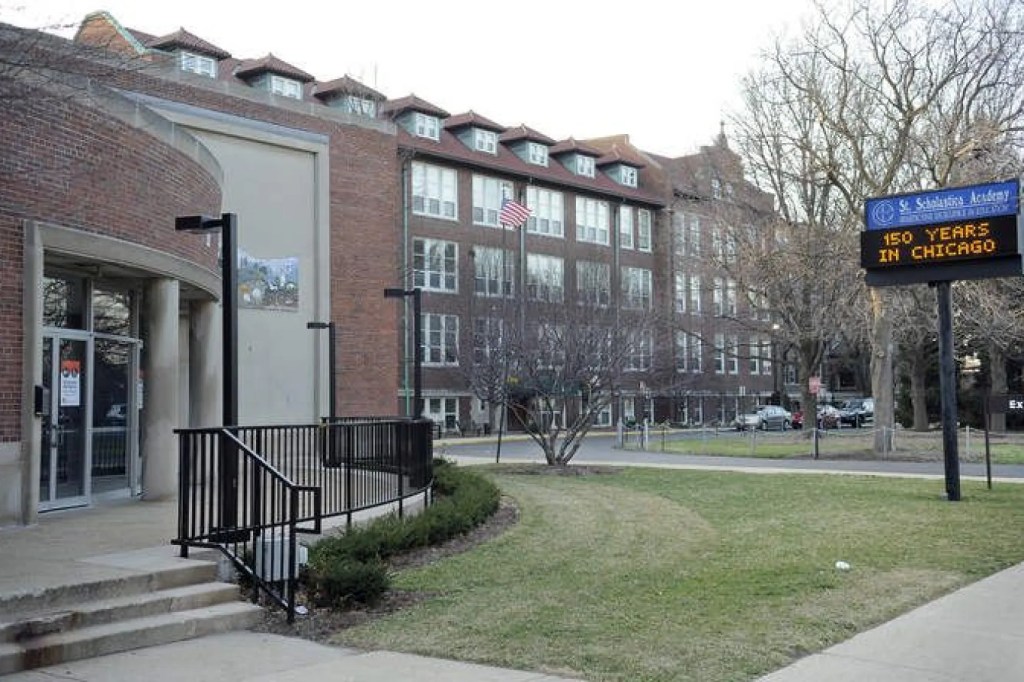
    And I’m grateful for that.